

At CATS Academy Boston, exceptional teaching lies at the heart of the student experience. Our faculty are not only experts in their fields, but passionate educators dedicated to helping students discover their strengths, challenge themselves academically, and prepare for success beyond the classroom. Through dynamic lessons, personalized support, and meaningful mentorship, our teachers inspire curiosity, critical thinking, and confidence in every student.
One such educator is Ms. Cheryl Gardner, Department Chair of English Literature and Director of Studies for the Stafford House Summer Program. With more than a decade at CATS Academy Boston, Ms. Gardner has become known for her engaging teaching style, deep love of literature, and unwavering commitment to helping students find their voice. We sat down with her to learn more about her journey into education, her passion for literature, and what makes learning at CATS Academy Boston so special.
Did you cultivate a love of learning from a young age and is there a moment that inspired this?
“I came from a family of voracious readers so having a book with you at all times was entirely natural.”
“I always loved language and found words delightful and funny. I distinctly remember learning the word “bizarre” as a young kid and being really entertained by it.”
That fascination with language continued through her education. She attended Stonehill College, where she studied under Professor Barbara Estrin, a Shakespeare scholar who remains one of the most influential teachers in her life.
“She helped her students appreciate the way Shakespeare explores such a wide range of human experiences with incredible insight and understanding. For me, this was a key lesson on the power and necessity of reading.”
After earning her undergraduate degree, Ms. Gardner went on to complete a Master’s degree in English Literature at Boston College and later completed all coursework and comprehensive examinations for a PhD at the same institution.
Did you always know you wanted to work in education?
“I did not always want to work in education. I always imagined that I would be too introverted for the job. I was wrong about that.”
After teaching at Boston College and later working as a tutor in writing, literature, and standardized tests, she joined CATS Academy Boston after spotting a vacancy in the English department.
“I’ve never wanted to work elsewhere. The students are special, sweet, courageous and culturally interesting, and the relationships among faculty are strong and supportive.”
“I really love engaging students, and it brings out a side of me I wouldn’t have tapped into if I didn’t start teaching. My teaching philosophy is to give students as many ways as possible of interacting with text. When students interact with text, they become stronger readers. Reading is an active process. Looking at the text is not the same as reading. If you stop by my classroom, you are likely to see students cutting stories apart, physically and intellectually.”
This hands-on approach encourages students to think critically, ask questions, and form meaningful personal connections with what they read. Today, eleven years later, she continues to find joy in helping students engage deeply with ideas, texts, and one another.
What attracted you to English Literature? Is there a particular book that inspired your interest in the subject?
“Every dystopian novel I’ve read has as one of is features the limitation of literature and a discouragement of deep thought. Why? Because an educated populace can think, evaluate and change things for itself. Our very freedom as individuals and citizens depends on literature and the habits of thought it encourages. Literature exposes us to different ways of thinking and living. It exposes us to a shared human experience. Hanging on to these habits of mind encouraged by literature is key to humans remaining humans.”
The ability to think, evaluate, empathize, and imagine what might be rather than simply accepting what is, depends on the habits of mind that literature encourages. For Ms. Gardner, protecting these habits of critical thinking and empathy has never been more important.
As well as the Department Chairperson for Literature, Ms. Gardner also hold the post of Director of Studies for the Stafford House Summer program at CATS Academy Boston. What makes the summer program experience at CATS Academy Boston unique for students?
“We have a lot to offer here in Boston. Students really enjoy the Freedom Trail, the New England Aquarium, the Harbor Cruise. It’s a beautiful city and students enjoy getting to know it. I tried this year to create lots of lessons integrating the field trips with the classes students took. We wanted to create excitement for the trips and to give students information and activities to make those trips more meaningful.”
She believes that balancing academic challenge with creativity and enjoyment is what makes the program stand out.
“I wanted the program to be joyful. Students are here to learn but they are also on vacation, so lessons needed to be rigorous but also fun and project-based. As a result, I tried to incorporate lessons that hit that mark. I think the extent to which we were able to incorporate fun without sacrificing rigor set us apart, but that could not have been accomplished without excellent teachers. I am so grateful for the group of teachers we had at Stafford House this summer.”
Having worked with students from around the world for many years, Ms. Gardner sees international education as an essential part of preparing young people for the future.
“International summer programs are a key part in a student’s education. They are a little like Literature in that they teach students that there are other ways of living, there are other cultures. They ward off an ethnocentric worldview. That is a key part of being an educated person in a global world.”
What do you enjoy most about teaching at CATS Academy Boston? Do you have a favourite memory from your time here?
“I enjoy many aspects of my role. I like seeing new teachers succeed and find their way in the classroom. I like seeing students succeed and find their way in life. When they come back from college and I can see that they are doing well and got what they needed here at CATS, that is a great feeling. When a lesson goes well and students are really learning, the feeling is like nothing else in the world.”
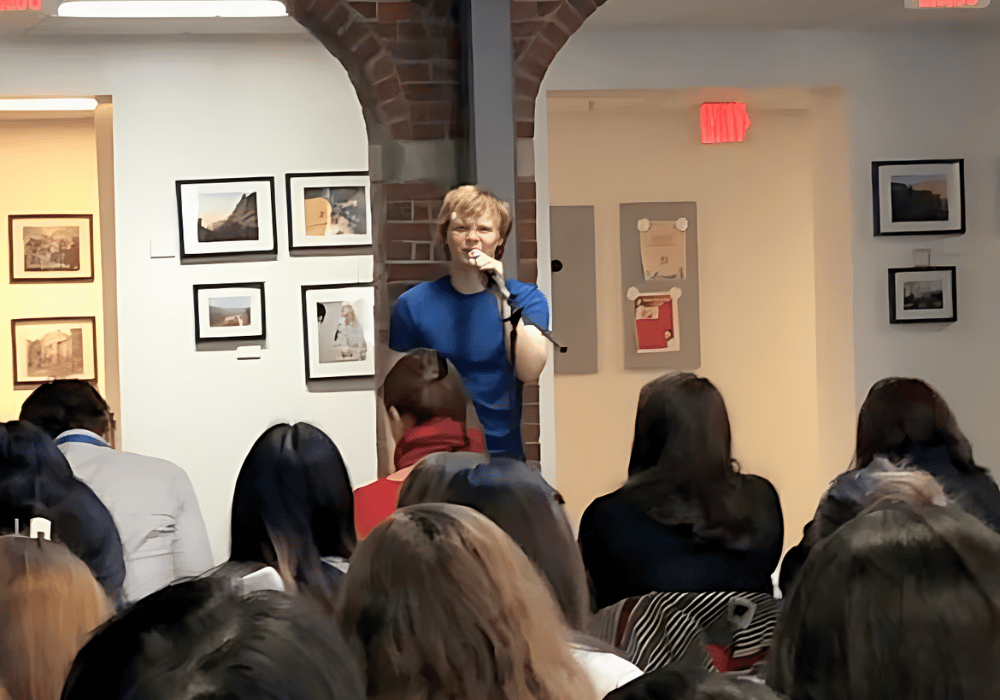
When asked about her favourite memory at CATS Academy Boston, Ms. Gardner immediately recalls an unforgettable Poetry Out Loud performance.
“Students regularly surprise and impress me with their recitations of poems. The students who do best at poem recitation aren’t always the most vocal students, the best writers, or the most serious scholars of Literature. But they have this dramatic flair and this ability to get inside the poem and let it pass through their voice and consciousness. One of my favorite moments last year was hearing one of our basketball students recite “Why I Don’t Write about George Floyd” by Toi Derricotte. During his recitation, you could have heard a pin drop. He made poetry real, immediate, and necessary. I live for those moments in the classroom.”
These moments of transformation, when students discover new talents, perspectives, or confidence, are what continue to inspire her.
What would you say to a student who is interested in studying at CATS Academy Boston?
I would quote Shel Silverstein: ‘If you are a dreamer, come in‘
“In other words, there is a place for you here at CATS Academy Boston. Whoever you are, you are welcome here. There’s warmth, and stories to share, and opportunities for all, from the athlete to the artist to the poet. We quite literally create specialized spaces for our students here at CATS.”
With educators like Ms. Gardner leading the way, students at CATS Academy Boston benefit from far more than academic excellence. They are encouraged to think deeply, dream boldly, and develop the skills, confidence, and curiosity that will serve them throughout their lives.